Showing posts with label wheat. Show all posts

Wednesday, May 26, 2010

Whole Wheat Pizza and Breadsticks

Aren't these cute?!
My three year old came up with the idea to use the dinosaur sandwich cutter on the breadsticks. Isn't he brilliant? We used our pizza dough recipe to make whole wheat and spelt pizza (do you need that recipe?). We used half of the dough to make breadsticks and half to make a pizza. (by the way - the one with the "well-done" head, was a little thin on the dough. The rest of the dinosaurs were thicker dough.)

Note- I have a super-picky eater at my house. This child likes pizza, but only likes tomato sauce on the pizza. I wondered what he would think of these dinosaur shapes. I even made some and baked the tomato sauce on top. 


They were such a hit, and he ate them all up so fast that I only got pictures of the ones that didn't have baked on tomato sauce. I only made four or five tomato sauce dinosaurs, so when he wanted more, we just threw some tomato sauce on top of the dinosaurs and he ate a few more! Hooray for fun food!


Here are the breadsticks that I made - with a layer of cheese on top. YUMM!


And just for fun - the pizza. I'm not a supreme pizza kind of girl, so this is how I like my pizza.

Tuesday, May 18, 2010

Flour in Food Storage & Notes on Hard Red Wheat

Question of the day:  (I haven't done this in a while. I'm glad for the opportunity.)

I have just started my food storage in earnest and... in my eagerness to begin my storage, I went to Costco and bought 300 lbs. of flour. I have come to realize that is A LOT of flour, and I am skeptical that I will go through it before it spoils. I have decided storing flour is probably not the best option.

I have a ton of red wheat in storage, but I have been told that only having red wheat in bread is bad for digestion, and therefore having 1/2 red wheat and 1/2 flour is best. Because I do not wish to store flour as stated above, I am wondering if I can store white wheat to replace the flour and therefore avoid the digestion problems?

I bake all of my own bread, and that is primarily what the wheat in storage would be used for.

Do you have any other suggestions about storing wheat that would help me in my food storage voyage? Any information you can give me would be greatly appreciated!

My Answer: 

Great questions. Well, first of all, hard red wheat is not necessarily BAD for digestion. It depends on the person and their individual digestive system. Though, Hard red wheat is typically harder to digest than others.

I used to store a lot of flour in my food storage. I now only store about 150 lbs for my laziness (when I don't have time to grind flour or energy and just need a quick cup for some cookies or something) and then store several types of grains. As a matter of taste, I do not love to use only hard red wheat. It is too much "heavy" whole wheat flavor and texture for me. I do not enjoy hard red wheat by itself. I do enjoy using hard red wheat in portions, though. I store hard red wheat, hard white wheat, spelt and bread flour. I use the flour, like I said, when I'm being lazy or my kids want to bake something. (At least for now.) Otherwise, I'll grind my own flour from the red, white wheat and spelt - usually in equal portion and use that. The flavor is so much better when I mix my grains. Even if you use 1/2 red wheat and 1/2 flour (so you can use up some of that flour faster than you normally would if you ground all of your own flour for your bread), your bread would be much better than just using whole red wheat and you shouldn't experience such drastic digestive problems.

As a matter of interest, hard white wheat is great in breads and will give your bread a sweeter flavor. Spelt has a bit of a nutty taste to it. So, mixing all of these grains together and storing them for such use is my preferred method.

Does that help?

p.s. Plastic Buckets (5-6 gallons) or large rubbermaid or metal garbage cans are a great way to store your grains (I don't take mine out of the original packaging, though you could) and/or flour. It helps keep the rodents out, helps maintain dryness (supposing things flood sometimes) and basically keeps the air and sunlight off of your food storage.

Until later.

Saturday, May 1, 2010

Chicken Fried Chicken

I never thought I would use whole wheat flour as much as I've been using it lately. Last night I made chicken fried chicken with whole wheat flour. It was DIVINE!!

Oh, you mean I was supposed to take a picture? I devoured it too fast.... oops. It was that good. I felt like I had been to a restaurant and someone else had made it.

Not to say that my cooking is bad - I've just never done fried chicken before, of any variety. But I do love a good chicken fried chicken with a little creamy country gravy.

I've also been using whole wheat flour in my cookies lately. I feel like I can eat more cookies when they have whole wheat goodness in them! (Just what I need - more excuses to eat more cookies!)

Do you use whole wheat flour in your baking/cooking? Frequently or just sometimes or never?

p.s. I'd probably use it more often than I do, but I fresh grind it, and I think grinding can be annoying when I have a sleeping baby close by...

Monday, February 15, 2010

Basic Differences in Spelt, Triticale, Kamut

Have you ever wondered what the differences really are in different types of grains and how they compare to wheat? Do you know what some of your grain options are if you find out you have gluten allergies? You don't have to completely eliminate grains and bread from your diet - you just have to be a little more creative in your baking.

Oh - you don't have to have gluten allergies to enjoy these grains - they actually have a nice flavor to them.


Well, here is a quick summary of a few grains for your grain reference.

SPELT
  • Spelt has a lower, more fragile gluten content. This means that SOMETIMES, people with gluten allergies can actually eat spelt (but it is a good idea to check with your doctor first)
  • Spelt has higher fiber than wheat
  • Spelt contains 15-21% protein (which is higher than regular wheat)
  • Spelt is higher than wheat in complex carbohydrates, iron, potassium, and B vitamins
  • It contains nutrients that aid in blood clotting and stimulates the immune system
  • Spelt is similar to cooking with wheat flour, but you might find you need a little less water (start with 3/4 of what the recipe calls for), or a little more flour and because of the lower gluten content, don't let your dough rise as high as when using regular wheat flour
  • Spelt has a bit of a "nutty" taste to it

TRITICALE
  • Triticale has a lower gluten content than wheat
  • Triticale has a higher protein per gram than wheat
  • Triticale has more amino acids and lysine
  • Triticale flour is more similar to wheat in taste and can be easily substituted for wheat flour. However, if using leavened breads, you must add at least 50% wheat flour because of the very low gluten content of triticale.
  • Be careful when kneading triticale. Do not over-knead the dough as this can damage the delicate gluten.
  • Triticale is a cross between durum wheat and rye.

KAMUT

  • Kamut also has a lower gluten content like spelt, so many people turn to kamut when they have gluten allergies (still a good idea to consult with your doctor first before eating this when you have gluten allergies)
  • Kamut contains 17-19% protein - higher than wheat.
  • Kamut has less fiber than wheat
  • Kamut is higher in vitamin A, thiamin, riboflavin, phosphorus, magnesium, zinc, pantothentic acid, copper and complex carbohydrates.
  • Kamut is considered a "high energy grain"
  • Kamut is similar to cooking with durum wheat, so you will have a heavier loaf of bread if you only use kamut. You can add wheat gluten for a lighter loaf - providing your allergies allow it.
  • Kamut works great in cakes and pastas.
This summary is based on research done by The Preparedness Store in Idaho Falls, Idaho

Monday, April 27, 2009

Spring into Summer Open House Party Announcement


Come one, come all - we are having a party! Well, an open house, really. On Tuesday. Tomorrow.

We will have vendors for jewelry, scentsy wickless candles, Dairy Maid Skin Creams, wheat, spelt & flaxseed, and possibly some fun baby accessories. And who knows what else will show up. It is like a mini craft fair... Plus, we will be featuring ME for a quick bread demonstration on rolls and bread type desserts! Who doesn't love bread and dessert in the same sentence?!?

We will also tell you all about the excellent deals on food and you can sign up to receive alerts for our fruit stand - when we get new fruit and excellent deals!

It is going to be fun and casual, so email me at info@HiStakes-Spelt.com if you want more details (like time and directions).

It will be fun... I am totally excited and getting ready for it today (and tomorrow).

Thursday, March 26, 2009

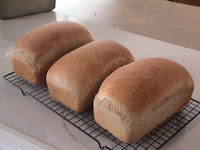
Save Money by Making Your Own Healthy Whole Wheat Bread

If you buy bread frequently, you could be saving money by making your own bread.

What?!? I know, you think I'm crazy by saying that, right? Well, you read that correctly. Even buying all of your supplies: your own ingredients, a Bosch Universal Plus mixer, and possibly a grain mill, you could still make money after about one year – or spend it elsewhere rather than buying bread that is not necessarily good for you.

First of all, did you know that lots of bread companies – including those who make whole wheat “good-for-you” bread – use high fructose corn syrup in their bread? If you do not know the tragedies of high fructose corn syrup in your diet, do a little research (Google it – there is plenty of information out there and I do not want that to be the focus of this post.) Plus, they use all kinds of preservatives and who knows what else. Besides, homemade cooking and baking is always better for you because you know exactly what ingredients you are putting into your food.

If you need the tools to make your bread – don’t fret. They aren’t that expensive when you look at the big picture.

I recommend using a Bosch Universal Plus machine to mix your bread. (Find a good deal on the Bosch Universal Plus and on our grain mills at HiStakes-Spelt.com.)
The Bosch Universal Plus has an excellent motor for dealing with bread dough, a great warranty, and it lasts at least 25-30 years. Very few machines can make that claim.

Check out our grain mills here - we only sell our favorite ones.


So, we did some math for you to show you how to make money by making your own bread and buy the tools you need (like the Bosch Universal Plus and a grain mill).

In the Beginning: We took an average family (we’ll call them the Smiths) who eats about three loaves of bread per week. The Smiths purchase whole wheat bread at $3.50 per loaf.

Changes: The Smith family purchases a Bosch Universal Plus and bread ingredients as listed in my 100% Whole Wheat Bread in your Bosch Universal Recipe.


Ingredients Cost per batch of bread (batch = 6 loaves)

Whole wheat flour $2.88
Golden Flaxseed $1.53
Dough Enhancer $0.34
SAF Instant Yeast $0.22
Honey $1.14
Water $0.05
(Canola) Oil $0.04
Salt $0.06

Total $6.36 for 6 loaves of bread
$1.06 for 1 loaf of bread

Savings: $2.44 (buying bread at $3.50/loaf versus making your own at $1.06/loaf.)

Weeks to recoup purchase cost of Bosch: 54.64 weeks (that is just over 1 year)
(Remember, this calculates the original bread purchase of 3 loaves per week, so I f the Smith family continues to eat 3 loaves per week, after one year, they have their Bosch paid for and are “making money” that they were using to buy bread!)
And if you need to purchase a grain mill, it will only take about 18-24 months to recoup the cost of the Bosch and the grain mill (depending on which one you choose) before you are saving all that money that you were using to buy bread. Besides, your health will improve from the increase of whole grains and fiber in your diet – what better reason to make your own bread?

This scenario worked for the Smiths and it could work for your family, too!!


Start making bread and saving money today!

**Disclaimer, we will not be held responsible for your increased bread consumption when you make your own bread.
Thursday, February 12, 2009

p.s. WonderMill Wheat Grinder

I was reminded that the WonderMill price is going up on Feb 15 - so if you are anxious to get one - lock in the price soon before it goes up!

Monday, December 1, 2008

FREE Bread Classes Available


I've decided to teach {FREE} bread classes to all who want to come and refine their bread techniques, or who want to learn about different kinds of wheat, grinders and flour, or who just need a social outing!

Wanna come?

We just had a class last week. We had a LOT of fun and learned lots of tricks. It was a hands-on class, so you know how to "feel" when the bread is ready when you try this at home. It was a totally custom class. We chose to work with hard red wheat and spelt. We learned to make bread and then voted to make cinnamon rolls with the extra. We swapped recipes, talked and shopped while the bread rose and then when the cinnamon rolls were done baking, we each got to eat one.
They were DELICIOUS!!

More classes are available upon request.
I have a few scheduled and would be happy to work something out to fit your schedule.

It is a lot of fun and I hope you'll join us for a class sometime soon.

Monday, October 20, 2008

Spelt and Hard White Wheat available

Did I ever mention that we have this years harvest of spelt now available and ready for sale (and shipping). We also have hard white wheat bagged and ready.

Spelt is available in 25 lb and 50 lb bags.
Hard White Wheat is available in 50 lb bags and 45 lb buckets (all ready for storage).

For prices, go here:
http://www.HiStakes-Spelt.com/

Talk to you again soon.

Thursday, August 21, 2008

Spelt Harvest

The long awaited time has arrived. We started slowly harvesting spelt. Our first load has been transported far away to be cleaned and packaged. If you are anxiously awaiting and have signed up on my list (www.histakes-spelt.com/spelt.php), you will be alerted when it is on its way back. The time is coming!

I've taken a few pictures to share with you the beauty of Idaho havest time...

This is one of our wheat fields that makes me sing "America The Beautiful" as it turns from green to amber! I love watching the grain ripen and change colors.
This is actually spelt. This part is about ready for harvest!
And here we are - havesting. The combine just went past, the guys are making sure it is thrashing right, and we are in business for harvesting. I love havest in Idaho.

And just to add to the mood, this was our sunset tonight

Happy harvesting!

p.s. If I'm not such a faithful blogger in the next little while, it is because I am out driving a combine. I will catch up as soon as my employer will let me have a break. ;)

Monday, June 23, 2008

Water, Water

I know a lot of the midwest is under water. We worry about you who live there.

We, in Idaho, jumped from winter to summer (seriously, snow to 80 degrees) within 10 days time. The temperatures continue to rise and we struggle to keep our crops watered. So, if you don't hear from me for a few days, there is a good chance it is due to water.

I get a lot of questions asking what else we grow besides spelt and wheat. So, here is getting to know us better.

We also grow potatoes (by the way, potatoes really are healthy for you. It is the butter and sour cream that isn't so healthy for you.), seed peas, alfalfa hay, grass hay, hard red wheat, soft white wheat, and sweet corn, and a few cows.

The sweet corn is only about 3 acres that we pick by hand each harvest and sell locally. It usually turns out to be the best sweet corn I've ever had.
Everything else is grown in lots of 20-200 acres. (That is a very rough estimate)

So, there you have it... now you know!

Talk to you again soon.

Saturday, May 10, 2008

World Wheat Storage Drama

Would you like to know a really interesting fact? Let me tell a story to illustrate it.

Once upon a time in the future, we had a major world food crisis. War was going on, and life was not pretty. We needed food to survive and could not grow it ourselves. So? We took the world wheat supply and rationed it out to everyone. (Those who had wheat allergies could share their ration with whomever they chose.) You only got a little over 2 pounds of wheat. WHAT??!?!?! TWO POUNDS!!?!?! How are you going to live on 2 pounds? The world wheat reserves are not what they should be, they won’t last us very long if we each had to live on just over 2 pounds of wheat. How do you feel about that?

I just read a news brief from a few days ago saying that we should have a larger wheat crop this year than last year, but don’t expect prices to drop too much. Prices will be moderated, probably. The article suggests that prices will not collapse. That is good because costs of production has increased a lot. And a lot of countries most likely will be wanting to develop more of a strategic reserve than what they have, so should be considerable buying from them - particularly if prices moderate.

What is the moral of the story? Don’t count on your government to bail you out - they do not have the food reserves. Maybe you want to become better friends with neighbors and divide the food storage responsibilities. (I’ll get the grain, you get the fats, someone else get the…. and so on.) Or if you are able, get your food storage ready - you never know when you are going to need it.

LinkWithin

Blog Widget by LinkWithin

What things are most Important to Store?